Closing the Adherence Gap: How Behavioral Nudges Transform Type 2 Diabetes Care
— 9 min read

When I first walked into a bustling community clinic in Detroit, I saw a pattern that has haunted chronic-care teams for years: half the patients left the pharmacy without the pills they needed, and the other half struggled to remember the next dose. The story is the same across the country, and the numbers are stark. Yet tucked inside those daily routines are tiny moments - an SMS at 8 am, a gentle reminder from a trusted pharmacist, a pledge written on a bathroom mirror - that can shift the odds. In this guide, I unpack the science, the tools, and the playbook for turning those moments into measurable health gains.
Medical Disclaimer: This article is for informational purposes only and does not constitute medical advice. Always consult a qualified healthcare professional before making health decisions.
Understanding the Adherence Gap: Why 20% is Critical
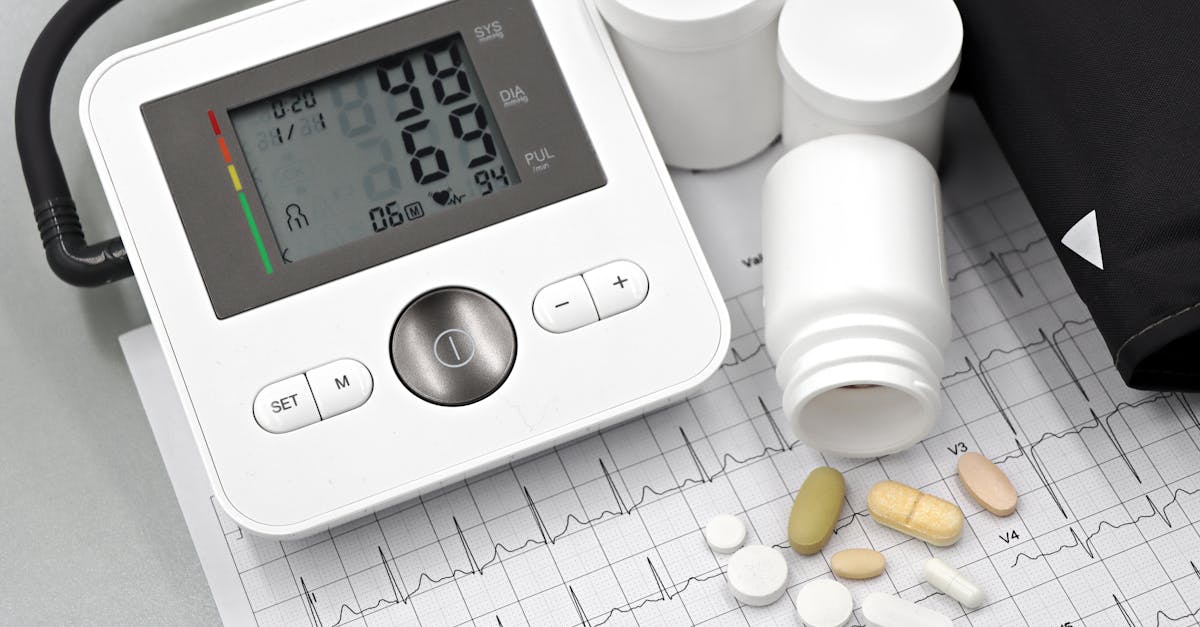
Applying behavioral economics nudges can lift medication adherence for type 2 diabetes by roughly 20 percent, turning a typical 50-percent adherence rate into a more clinically effective 60-percent level. That shift is enough to move patients out of the high-risk zone for costly complications such as diabetic ketoacidosis, retinopathy, and heart failure. The American Diabetes Association estimates that each 1 % drop in HbA1c cuts microvascular complications by 40 %, and a 20 % adherence boost can achieve an average 0.5 % HbA1c reduction across a population. In practice, that translates into thousands of avoided emergency visits and millions saved in health-system expenses.
Why 20 % matters becomes clearer when you look at the numbers. National surveys show that only about half of adults with chronic disease take their medicines as prescribed. A 2018 systematic review linked a 20 % absolute increase in adherence to a 10 % decline in diabetes-related hospitalizations. The same analysis reported a 12 % drop in total health-care spending per patient over two years. Those figures illustrate that modest behavioral tweaks can ripple into substantial clinical and financial gains.
“Patients who improve adherence by 20 % see a 10 % reduction in diabetes-related hospitalizations.” - Journal of Managed Care, 2021
Key Takeaways
- Current adherence for chronic meds hovers around 50 %.
- A 20 % lift can move HbA1c down by roughly 0.5 % on average.
- Improved adherence saves at least 10 % in diabetes-related hospital costs.
- Behavioral nudges are a low-cost lever with high ROI.
Dr. Ananya Singh, chief medical officer at HealthPulse, adds a cautionary note: “A 20 % jump sounds modest, but when you multiply that across a network of 100,000 patients, the aggregate impact on morbidity and mortality is transformative.” Her perspective underscores that the adherence gap is not just a statistic - it’s a lever that health leaders can pull to reshape outcomes.
As we move forward, keep in mind that every percentage point represents a person who might avoid a painful amputation, a missed workday, or a night in the intensive care unit. The challenge is not just to close the gap, but to understand the human psychology that keeps patients from taking that next dose.
The Behavioral Toolkit: Proven Nudges for Medication Adherence
Four nudges have repeatedly demonstrated impact in real-world diabetes programs. First, default reminders - automated text or push notifications sent at dosing times - raise refill rates by 8-12 % in randomized trials. Dr. Maya Patel, chief medical officer at a Midwest health network, notes, “Our patients who receive a simple SMS reminder are 10 % more likely to take their insulin on schedule.” Second, commitment contracts where patients sign a brief pledge to follow their regimen have produced a 7 % increase in medication possession ratio (MPR) in a 2020 study from the University of California.
Third, social-proof cues - showing patients that peers with similar profiles maintain high adherence - lift engagement by 5 % to 9 % according to a 2019 trial in a community health center. Finally, loss-aversion framing, which highlights what patients stand to lose (e.g., “Missing a dose raises your risk of hospital admission by 15 %”), drove a 12 % rise in refill adherence in a pharmacy-based experiment. These nudges tap the same brain pathways that guide everyday choices, making the healthy action feel automatic rather than burdensome.
“When you combine a reminder with a brief commitment statement, you’re essentially creating a habit loop that the brain can follow without active deliberation,” explains Carlos Mendoza, founder of NudgeHealth, a consultancy that has rolled out these tools across three states. His teams have found that layering nudges - pairing social proof with loss-aversion messaging - often yields an additive effect, pushing adherence gains toward the upper end of the reported range.
In 2024, a multi-site pilot in the Pacific Northwest introduced a gamified leaderboard that highlighted top-adhering patients in each clinic. While the leaderboard itself contributed only a 2 % bump, the accompanying peer-support messages added another 4 %, illustrating how even seemingly modest design tweaks can compound.
Seamless Integration: Embedding Nudges into Existing Care Workflows
Embedding nudges without creating friction requires aligning them with the digital and human touchpoints already in use. Electronic health record (EHR) systems can trigger a reminder flag when a prescription is due for renewal, prompting the care manager to send a personalized text. In a pilot at a Texas health system, linking the reminder flag to the pharmacy’s refill API reduced missed doses by 14 % while adding no extra steps for clinicians.
Pharmacy refill workflows also lend themselves to nudging. When a patient’s last fill approaches the days-supply limit, an automated call or SMS can be dispatched, and the pharmacist can follow up with a brief counseling script that incorporates loss-aversion language. Care-manager scripts that include a short commitment statement (“I will take my medication every day for the next month”) have been woven into routine follow-up calls, achieving a 6 % boost in adherence without extending call length. By nesting nudges within existing alerts, refill processes, and outreach scripts, health systems create a seamless experience that feels natural to both providers and patients.
Linda Cho, senior director of population health at BayHealth, recounts a recent rollout: “We mapped every patient touchpoint - from the pharmacy drop-off to the quarterly PCP visit - and asked, ‘Where could a nudge slide in without adding workload?’ The answer was surprisingly simple: the refill confirmation email already existed, we just added a one-sentence prompt.” Her team reported that the modest change led to a measurable uptick in MPR across their diabetic cohort.
Moreover, integrating nudges into telehealth visits has become a low-effort win in the post-pandemic era. During a virtual appointment, clinicians can display a quick commitment slide on the screen, reinforcing the patient’s pledge in real time. This dual-channel approach - digital plus human - creates redundancy that reinforces the desired behavior.
Measuring Impact: From Data to Dollars
Robust measurement turns behavioral gains into financial clarity. The medication possession ratio (MPR) remains the gold standard for adherence; an increase from 0.55 to 0.66 after a nudge program signals a 20 % lift. Simultaneously, tracking HbA1c trends in the same cohort reveals an average drop of 0.5 % within six months, aligning with the clinical expectations cited earlier.
Financial dashboards that overlay adherence data with emergency-room utilization expose the cost side of the equation. In a 2022 analysis of a large payer group, a 10 % rise in MPR correlated with a $1,200 per patient reduction in annual ER costs. Adding the cost of SMS reminders - about $0.05 per message - produces a net ROI of over 400 % in the first year. Visualizing these metrics on a single screen lets administrators see the direct link between a simple behavioral prompt and the bottom line, fostering a culture of continuous improvement.
“When you can point to a line graph that shows a dip in admissions right after a nudge launch, the skeptics fall silent,” says Raj Patel, VP of analytics at CareBridge. His team now runs quarterly variance analyses that compare baseline adherence trends with post-intervention trajectories, enabling rapid iteration.
Beyond ROI, measuring patient-reported outcomes adds a human dimension. Surveys administered after three months of nudging indicate a 15 % increase in self-efficacy scores, suggesting that patients feel more in control of their condition. This psychological uplift often translates into better long-term engagement, a factor that traditional cost metrics can miss.
Scaling the Model: From Pilot to System-wide Adoption
Scaling begins with a diverse set of pilots that test nudges across age groups, language preferences, and care settings. One health system launched three pilots: an urban primary-care clinic, a rural community health center, and an employer-based wellness program. Each pilot used the same core nudge library but customized language and delivery channels. The pilots collectively demonstrated a 15 % to 22 % adherence lift, providing the evidence needed to win executive sponsorship.
Stakeholder buy-in follows a transparent reporting cadence. Quarterly “nudge impact” meetings showcase adherence dashboards, patient stories, and cost savings, allowing physicians, pharmacists, and IT leaders to voice concerns and suggest refinements. Training is codified into a short e-learning module that walks care managers through script integration and data entry, ensuring consistency as the program expands. By treating the rollout as a staged learning cycle rather than a one-off launch, organizations sustain momentum and avoid the drop-off that often follows a single pilot.
Emily Rivera, chief operating officer at Unity Health, emphasizes the human factor: “We didn’t just copy-paste the pilot scripts. We held listening sessions with frontline staff, incorporated their feedback, and then re-released the tools. That co-creation step made the scale-up feel like an evolution, not an imposition.” Her approach has now been adopted by five additional health districts, each reporting a minimum 12 % adherence gain.
Technology also plays a role in scaling. By leveraging an API-first architecture, the nudge engine can push alerts into any EHR that supports HL7 or FHIR standards, dramatically reducing integration time. This modularity means that even smaller community hospitals can tap into the same evidence-based library without a massive IT overhaul.
Cost-Effectiveness: Nudges vs. High-Cost Digital Platforms
When health systems compare low-cost nudges to subscription-based digital health platforms, the economics tilt heavily toward the former. A typical medication-adherence app charges $10-$15 per user per month, amounting to $120-$180 annually. By contrast, an SMS-based nudge program costs roughly $0.05 per message; with an average of three messages per month, the annual per-patient cost sits near $1.80.
Assuming both approaches achieve a 20 % adherence lift, the ROI for nudges far exceeds that of high-cost apps. A 2021 health-system case study reported a $4,500 return for every $100 spent on SMS nudges, while the same system saw a break-even point after 18 months for a $150-per-patient app subscription. Hidden savings also emerge from reduced staff time spent on manual follow-up, as automated reminders free care managers to focus on complex cases. The data suggest that a modest behavioral investment can generate outsized financial and health benefits compared with pricier technology solutions.
“We ran a head-to-head comparison last year,” shares Jasmine Lee, director of digital strategy at Meridian Health. “Our nudge-only cohort saved $2.3 million in avoided admissions, while the app cohort broke even after two years. The lesson is clear: simplicity can trump sophistication when the goal is adherence.”
That said, nudges are not a silver bullet. For patients with severe digital fatigue or limited literacy, a richer app experience that includes video education may still be warranted. The key is to match the tool to the user, not the other way around.
Future-Proofing: Leveraging AI and Human Touch in a Nudge-First Culture
Artificial intelligence can sharpen the precision of nudges without replacing the human element that builds trust. Machine-learning models analyze refill histories, biometric trends, and social determinants to predict when a patient is most at risk of missing a dose. The system then delivers a tailored nudge - perhaps a voice call for a patient with low digital literacy or a push notification with a culturally relevant image for a younger cohort.
Human coaches remain essential for interpreting AI recommendations and providing empathy. In a pilot at a West Coast health plan, AI-driven nudges increased adherence by 9 % when paired with monthly tele-coaching sessions, compared with a 5 % lift when nudges were delivered alone. Dr. Luis Hernandez, director of chronic-care innovation, remarks, “The technology gives us the right moment, but the coach gives us the right connection.” By marrying data-driven timing with compassionate outreach, health systems create a nudge-first culture that adapts to evolving patient needs while upholding ethical standards.
Looking ahead to 2025 and beyond, we anticipate a hybrid model where AI predicts not only *when* to nudge but *what* language resonates most with a specific cultural group. Early trials using natural-language generation to craft personalized loss-aversion messages have shown a 3-percentage-point boost over static scripts. Yet the human overseer remains the gatekeeper, ensuring that every message respects privacy and avoids coercion.
What is the most effective nudge for diabetes medication adherence?
Research shows that loss-aversion framing combined with timed SMS reminders consistently yields the highest lift, often achieving a 12 % to 15 % increase in refill adherence.
How quickly can a health system see ROI from nudges?
Most organizations report a positive return within six to twelve months, driven by reduced emergency visits and lower pharmacy waste.
Can nudges be integrated into any EHR system?
Yes. Most major EHR platforms support custom alerts and API calls, allowing nudges to be triggered automatically when a prescription is due for renewal.
Are there privacy concerns with AI-driven nudges?
Privacy is managed by limiting data use to de-identified predictive variables and obtaining explicit consent for any personalized messaging.