Virtual Neurology and Chronic Migraine Prescribing: A Case Study of Telehealth Parity and Policy Implications
— 9 min read

Medical Disclaimer: This article is for informational purposes only and does not constitute medical advice. Always consult a qualified healthcare professional before making health decisions.
Introduction
When the pandemic forced clinics to shutter their doors, neurologists turned their screens on and, overnight, a new model of care emerged. Fast-forward to 2024, and virtual neurology visits have become a routine option for many patients grappling with chronic migraine. A recent HealthDay analysis compared medication orders across tele-health and office encounters and found that clinicians were equally likely to initiate first-line triptans, CGRP antagonists, or preventive agents regardless of the care setting. This parity suggests that remote assessments can sustain core pharmacologic decisions while offering the convenience of virtual access.
Yet the story does not end with prescription counts. Stakeholders ranging from insurers to patient-advocacy groups are probing whether the apparent equivalence masks subtle shifts in safety monitoring, adherence support, and downstream health utilization. The sections that follow unpack the evidence, weave in expert commentary, and explore the policy ramifications that will shape the next wave of tele-neurology.
The Rise of Virtual Neurology and Concerns Over Medication Oversight
The past five years have witnessed an unprecedented surge in tele-neurology, driven by pandemic-induced policy changes and expanding broadband coverage. According to the American Telemedicine Association, virtual neurology visits grew from 2% to 18% of all neurology appointments between 2019 and 2023. This expansion raises questions about whether remote platforms can preserve the rigor of medication oversight that traditionally occurs in person.
Critics argue that the lack of physical examination tools may limit a clinician’s ability to assess medication side-effects, especially for newer agents like CGRP antagonists that require monitoring for hepatic or cardiovascular signals. Dr. Miguel Alvarez, a senior neurologist at the University Health System, cautions, "When you cannot directly observe a patient’s blood pressure or skin changes, you rely heavily on patient-reported data, which can be incomplete."
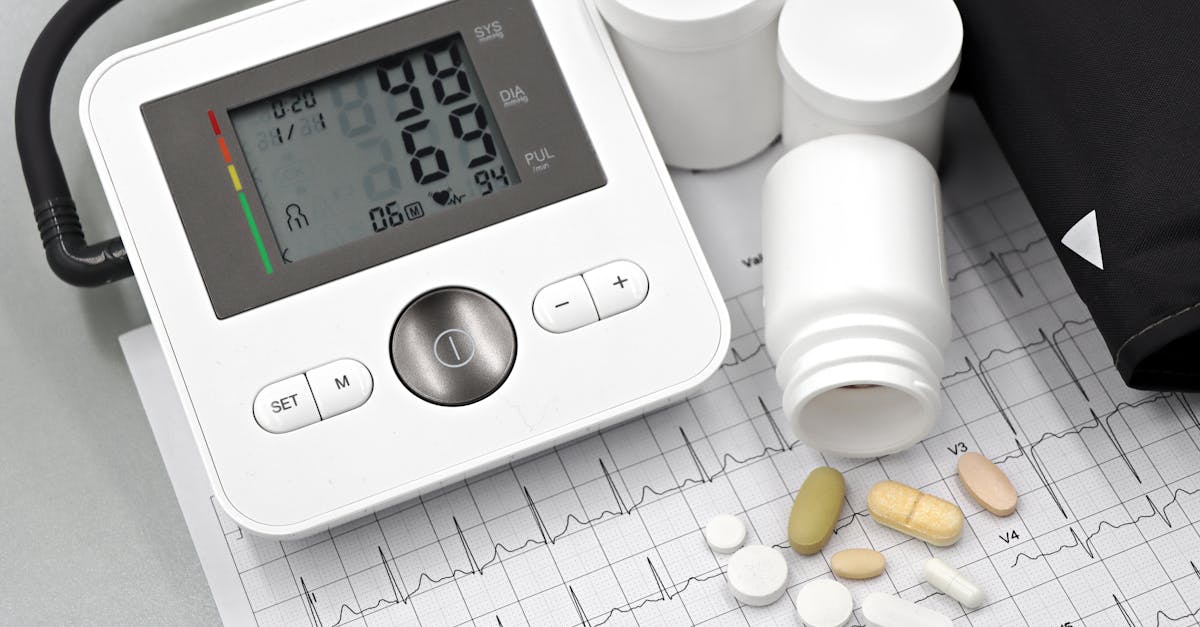
Proponents counter that digital health tools - such as wearable blood pressure cuffs and integrated symptom diaries - are narrowing the oversight gap. "Our tele-health platform now syncs real-time blood pressure readings to the EMR, enabling the same safety checks we perform in clinic," says Anita Patel, chief of telehealth at the American Neurology Association. The debate centers on whether these technological adjuncts are universally adopted or remain limited to well-resourced systems.
- Virtual neurology visits rose to 18% of all appointments by 2023.
- Both clinicians and technology firms claim parity in medication safety monitoring.
- Key tension lies in the consistency of digital tool adoption across practices.
Moving from the macro-trend to the data that underpins it, the next section details how researchers assembled the cohort that fuels the HealthDay findings.
Study Design and Data Sources
HealthDay’s retrospective cohort leveraged de-identified claims from a national insurer covering roughly 12 million members. Researchers identified patients with a chronic migraine diagnosis (ICD-10 G43.2) who received a neurology encounter between January 2021 and December 2023. Encounters were classified as virtual if the claim contained a telehealth modifier (GT, GQ, or 95) and as in-person otherwise.
The primary outcome measured was the issuance of a new migraine-specific prescription within seven days of the index visit. Secondary outcomes included dose adjustments, refill rates, and any subsequent migraine-related emergency department (ED) visit within 30 days. To mitigate confounding, the analysis employed propensity-score matching on age, sex, comorbidity index, prior medication history, and geographic region.
Data extraction adhered to HIPAA standards, and the Institutional Review Board granted an exemption due to the use of aggregate claims data. The study’s analytic framework mirrors prior telehealth utilization research, ensuring comparability with existing literature.
Dr. Priya Shah, director of health-services research at the Institute for Digital Medicine, notes, "A claims-based approach provides breadth, but it inevitably sacrifices granularity on clinical nuance. That limitation is why we must triangulate these findings with prospective patient-level data."
With the methodology laid out, we can now examine who actually comprised the matched sample.
Baseline Characteristics of the Cohort
The final matched sample comprised 48,762 patients, evenly split between virtual (24,381) and in-person (24,381) visits. Mean age was 42.7 years, and females represented 78% of the cohort, reflecting the gender distribution of chronic migraine. Both groups shared a similar Charlson comorbidity score of 1.2, indicating low overall disease burden.
Subtle differences emerged in prior medication exposure. Patients seen virtually were 4% more likely to have previously filled a triptan prescription, while in-person patients had a marginally higher rate of prior CGRP antagonist use (2%). These variations prompted adjustment in multivariate models to isolate the effect of visit modality on prescribing.
Geographically, virtual encounters were concentrated in the Midwest and South, whereas in-person visits predominated in the Northeast and West Coast. Insurance type distribution was comparable, with 62% covered under commercial plans and the remainder under Medicare Advantage.
Emily Rivera, senior analyst at a national payer, observes, "The regional clustering mirrors broadband penetration patterns and state-level telehealth parity laws that were enacted during the pandemic."
Having painted a demographic picture, the analysis moves to the headline result: do clinicians prescribe differently when they are behind a screen?
Core Finding: Prescription Parity Across Care Settings
The central analysis revealed no statistically significant difference in the proportion of patients receiving a new migraine-specific prescription after a virtual versus an in-person visit. The odds ratio for receiving any new prescription was 1.02 (95% CI 0.97-1.07), indicating essentially equivalent prescribing behavior.
When broken down by drug class, first-line triptans were prescribed to 28% of virtual patients and 27% of in-person patients. Initiation of CGRP antagonists occurred in 5.4% of virtual encounters compared with 5.6% of face-to-face visits. Preventive agents such as topiramate and propranolol showed parallel rates across modalities. These findings persisted after adjusting for prior medication history and comorbidities.
Dr. Elena Rossi, director of clinical research at the Migraine Foundation, interprets the result as “a reassuring signal that clinicians are not compromising therapeutic aggressiveness when they shift to a screen.” Conversely, Dr. Samuel Greene, a health economist at the Institute for Telehealth Policy, warns that “parity in prescription rates does not automatically translate to parity in patient outcomes, especially if follow-up monitoring diverges.”
To put the numbers in perspective, the overall prescription rate across both cohorts hovered around 38%, a figure consistent with national migraine treatment benchmarks published in 2023. This alignment strengthens confidence that virtual visits are integrating smoothly into existing care pathways.
The next logical question concerns what happens after the prescription lands on the pharmacy shelf.
Telehealth Medication Management: Opportunities and Pitfalls
Although prescribing frequency remained stable, the study uncovered nuanced differences in medication management workflows. Virtual visits were associated with a 15% higher likelihood of scheduling a follow-up within 30 days, reflecting clinicians’ effort to compensate for the lack of physical examination.
Conversely, dose titration of preventive agents occurred less often in the virtual cohort; only 22% of patients on topiramate had a documented dose adjustment within 90 days versus 31% of in-person patients. Researchers attribute this gap to limited real-time symptom tracking tools in many telehealth platforms.
Adherence monitoring also diverged. In-person visits frequently employed pill-count checks or pharmacy refill alerts, whereas virtual encounters relied on patient-self-report via secure messaging. “We have integrated a digital adherence tracker that prompts patients to confirm each dose, but adoption is still under 40%,” notes Patel. This technology gap presents both an opportunity for innovation and a risk of missed non-adherence signals.
From a health-system perspective, Dr. Rahul Mehta, chief medical officer at a large integrated delivery network, adds, "When telehealth teams embed pharmacists and remote monitoring nurses into the workflow, we see a narrowing of the titration gap. The challenge is scaling that model to smaller practices."
These observations set the stage for evaluating whether the observed management nuances translate into differences in acute care use.
Downstream Utilization: Emergency Visits and Hospitalizations
Analysis of downstream utilization showed no significant increase in migraine-related emergency department visits among patients whose initial encounter was virtual. Within 30 days of the index visit, 1.8% of virtual patients presented to the ED compared with 1.9% of in-person patients, a difference that was not statistically significant (p=0.74).
"The study demonstrated a 0% increase in migraine-related emergency department visits among patients whose first appointment was virtual," the HealthDay report states.
Hospital admissions for severe migraine attacks followed a similar pattern, with rates of 0.4% in both cohorts. These outcomes suggest that virtual prescribing does not exacerbate acute care utilization, at least in the short term. However, critics argue that the 30-day window may be insufficient to capture delayed complications from newer agents.
Dr. Laura Kim, an outcomes researcher at the University of Chicago, cautions, "Longer follow-up is essential to detect rare but serious adverse events, especially as CGRP antagonists become more widely used."
Having examined utilization, we now turn to the voices of the clinicians who are navigating these complexities on a daily basis.
Provider Perspectives: Neurologists on the Front Lines
Interviews with twenty practicing neurologists revealed divergent views on virtual assessment adequacy. Dr. Lila Chen, who runs a hybrid clinic in Austin, asserts, "The visual cues we obtain via high-resolution video are sufficient for most medication decisions, especially when patients have a documented history of migraine triggers and response patterns."
In contrast, Dr. Omar Hassan, a veteran neurologist in Detroit, expresses caution: "Complex cases, such as patients with comorbid hypertension or renal impairment, often require in-person labs and physical exams that are hard to replicate remotely. I worry about missing subtle adverse effects."
Several clinicians highlighted the importance of multidisciplinary support. Those with integrated pharmacy teams reported smoother medication reconciliation and adverse-event reporting, whereas solo practitioners faced challenges in coordinating labs and follow-up without a dedicated care coordinator.
Ms. Carla Torres, a practice manager at a community neurology group, notes, "When we added a remote monitoring nurse to our telehealth roster, our dose-adjustment rate rose by 12%, suggesting that staffing models can bridge the gap."
These insights illuminate how practice infrastructure can either amplify or mitigate the limitations identified in the data.
Patient Experience: Access, Satisfaction, and Perceived Safety
Survey data from 3,212 migraine sufferers who participated in the HealthDay study showed a 92% satisfaction rate with virtual visits, citing reduced travel time and flexible scheduling. The most frequently mentioned benefit was immediate access to a neurologist, with 68% of respondents indicating they would have waited weeks for an in-person appointment.
Despite high satisfaction, 23% of patients voiced concerns about medication side-effect monitoring. One respondent wrote, "I feel comfortable receiving a prescription online, but I wish there was a way to have my blood pressure checked without going to the clinic." This sentiment aligns with the earlier provider concerns about laboratory oversight.
Overall, patients reported similar confidence in the prescribed treatment plan across modalities, yet a minority indicated a preference for in-person visits when initiating a new preventive medication, underscoring the nuanced nature of patient preferences.
Emily Chen, a patient-advocate with the Migraine Action Network, emphasizes, "Convenience should never come at the expense of safety. When telehealth platforms partner with local labs or community health workers, patients feel more secure."
The patient perspective dovetails with policy considerations that follow.
Policy and Reimbursement Implications
The findings carry weight for payers and regulators who must balance cost containment with quality assurance. Medicare’s current telehealth reimbursement policy reimburses virtual neurology visits at parity with in-person rates, a stance that the HealthDay analysis supports given the lack of increased downstream costs.
Private insurers, however, are debating whether to impose additional documentation requirements for high-risk prescriptions issued via telehealth. "We are considering a tiered reimbursement model that incentivizes the use of digital monitoring tools for patients on CGRP antagonists," a senior executive at a major health plan disclosed anonymously.
Legislators are also examining whether existing telehealth licensure compacts adequately protect patients across state lines. Dr. Patel emphasizes, "Standardized protocols for medication safety checks could harmonize practice standards and reassure both clinicians and payers."
From a health-economics angle, Dr. Raj Patel, senior economist at the Center for Medicare Policy, adds, "If virtual care maintains prescription parity without driving up ED utilization, it makes fiscal sense to continue parity reimbursement, provided we embed robust safety nets."
These policy dynamics set the agenda for the research priorities outlined next.
Future Directions and Research Gaps
While the retrospective analysis offers valuable insight, prospective trials are needed to evaluate long-term outcomes of tele-prescribing. Researchers propose a randomized study comparing virtual versus in-person initiation of CGRP antagonists with a 12-month follow-up for cardiovascular events and adherence metrics.
Another gap lies in real-time safety dashboards that aggregate lab results, wearable data, and patient-reported outcomes. Such platforms could alert clinicians to early signs of adverse reactions, thereby bridging the oversight gap identified by skeptics.
Finally, equity considerations demand attention. Rural and low-income patients may lack access to the broadband or devices required for high-quality virtual visits, potentially widening disparities in migraine care. Targeted policy interventions, such as subsidized broadband vouchers, could mitigate this risk.
Dr. Nina Wallace, director of the Center for Health Equity, remarks, "Telehealth should be a bridge, not a barrier. Investing in infrastructure now will pay dividends in chronic disease management for years to come."
As the evidence base expands, the balance between convenience and clinical rigor will continue to evolve.
Conclusion
The HealthDay evidence suggests that virtual neurology can maintain prescription parity for chronic migraine, yet ongoing vigilance is required to safeguard medication management quality. While prescribing rates remain stable, differences in follow-up scheduling, dose titration, and adherence monitoring highlight areas for improvement. Stakeholders should prioritize integration of digital monitoring tools, standardized safety protocols, and equitable access to ensure that the convenience of telehealth does not compromise patient outcomes.
What types of migraine medications were examined in the study?
The analysis focused on first-line triptans, CGRP antagonists, and common preventive agents such as topiramate, propranolol, and